Ethiopia declares end of its first Marburg virus outbreak after 42 days with no new cases
Ethiopia has declared the end of its first recorded Marburg virus outbreak, concluding the WHO-recommended monitoring period with no new confirmed infections.
Outbreak officially ends after required monitoring period
Ethiopia on Monday, January 26, 2026, declared the end of its first Marburg virus outbreak after completing 42 consecutive days with no newly confirmed cases. The declaration follows weeks of heightened surveillance and response measures in affected areas, consistent with guidance used internationally for viral hemorrhagic fever outbreaks.
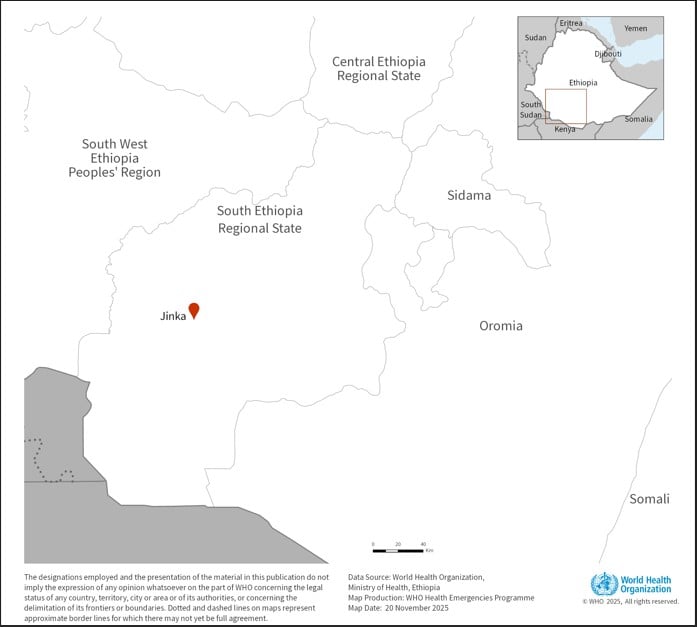
The outbreak began in mid-November 2025 in southern Ethiopia near the border region with South Sudan, health authorities said. In total, Ethiopia reported 14 confirmed cases during the event, including nine deaths and five recoveries. Officials also categorized additional fatalities as “possible” Marburg cases, reflecting the difficulty of confirming every suspected infection in remote settings or in situations where testing is not available in time.
What Marburg is—and why outbreaks are treated urgently
Marburg virus disease is a severe hemorrhagic fever related to Ebola. It can begin with symptoms such as fever, chills, headache, and muscle aches and may progress to vomiting, diarrhea, rash, and in some cases severe bleeding and shock. The virus is associated with fruit bats and can spread between people through direct contact with bodily fluids or contaminated materials and surfaces.
Because Marburg can spread rapidly in healthcare settings without strict infection control, outbreaks typically require fast isolation of suspected cases, protection of healthcare workers, contact tracing, and clear risk communication so communities recognize symptoms early and avoid unsafe caregiving and burial practices.
Response support and healthcare worker exposure
Ethiopian officials said that international partners—including the World Health Organization—supported response efforts with technical expertise, including surveillance, diagnostics, infection prevention and control, case management, and logistical coordination. Among those infected were healthcare workers, highlighting how quickly a hemorrhagic fever can endanger frontline staff when an outbreak begins before strong protective routines are in place.
No approved vaccine or treatment, but the response toolbox is improving
There is currently no widely approved vaccine or specific antiviral treatment for Marburg virus disease. Still, outcomes can improve with early supportive care—hydration, management of complications, and careful monitoring—as well as rapid public-health containment to prevent the chain of transmission from growing.
Ethiopia’s announcement marks an important milestone: while the outbreak was deadly, the country’s ability to sustain a full monitoring period without new confirmed cases suggests that containment measures succeeded and that surveillance remained sensitive enough to detect any re-emergence.