More than 30,000 Kaiser Permanente workers strike in California and Hawaii over staffing and pay
Thousands of Kaiser Permanente nurses and healthcare professionals walked off the job, citing staffing shortages, compensation, and bargaining frustrations. Kaiser said the strike was unnecessary and pointed to its contract offers and negotiations.
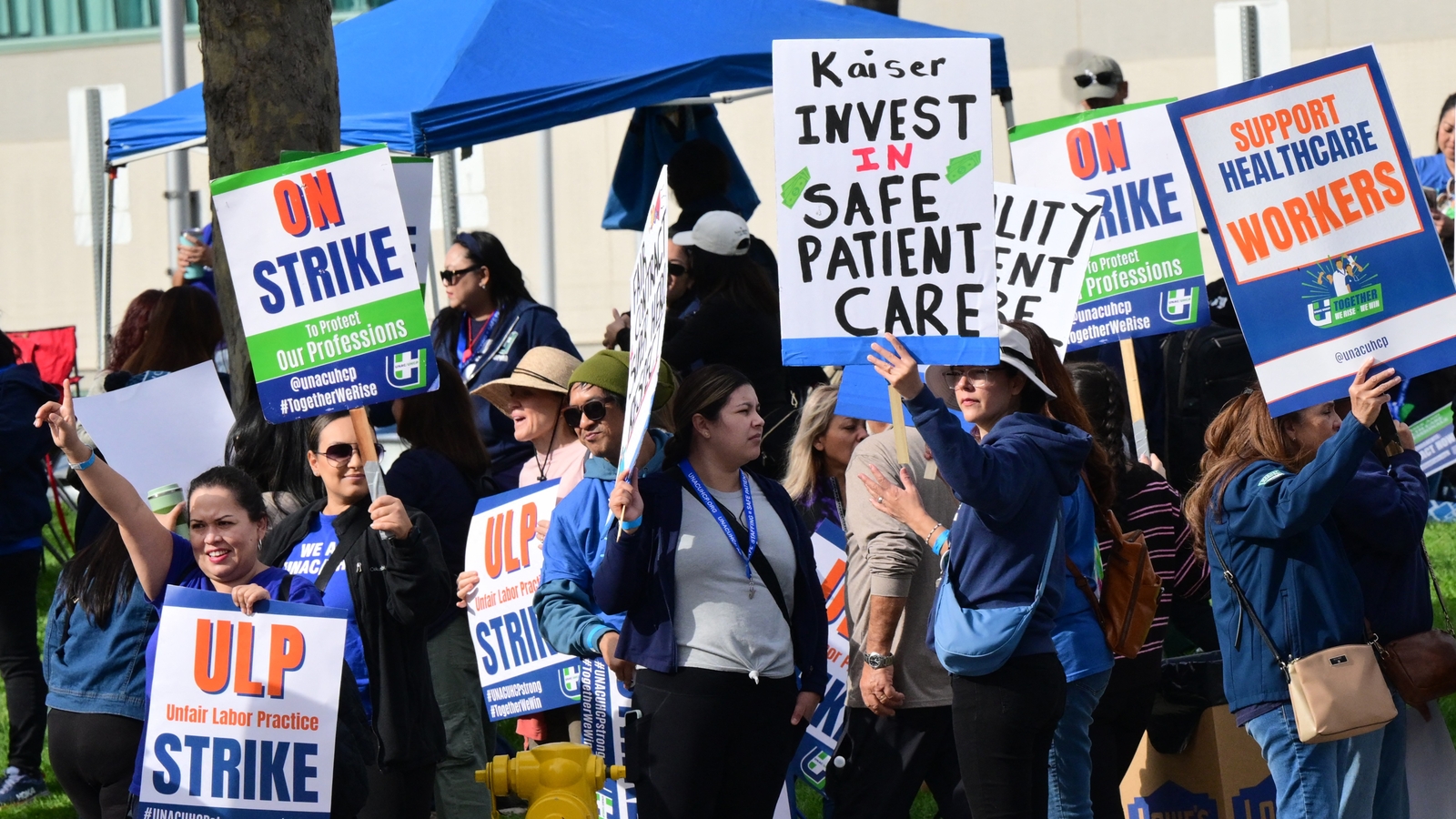
A large strike by Kaiser Permanente healthcare workers expanded across California and Hawaii this week, with union leaders saying staffing and compensation are at the center of the dispute. The walkout involves tens of thousands of specialized professionals—nurses, pharmacists, physician assistants, nurse practitioners, and other clinical staff—who argue that chronic understaffing is undermining care and pushing workloads past safe limits. ([abc7.com](https://abc7.com/post/31000-kaiser-permanente-health-care-workers-california-hawaii-go-strike/18478125/?utm_source=openai))
ABC7 Los Angeles reported that roughly 31,000 members of the United Nurses Associations of California/Union of Health Care Professionals joined the strike, which began Monday morning and was expected to continue until an agreement is reached. Picket lines formed at Kaiser facilities across multiple regions, illustrating the scale of the labor action inside one of the country’s most prominent health systems. ([abc7.com](https://abc7.com/post/31000-kaiser-permanente-health-care-workers-california-hawaii-go-strike/18478125/?utm_source=openai))
Kaiser Permanente disputed the union’s claims, saying a strike that disrupts patients is unnecessary and emphasizing that bargaining has been ongoing for months. In a statement dated January 25, 2026, Kaiser said it had been negotiating for more than seven months and argued it must balance competitive pay with the need to protect access and affordability for members in an environment of rising healthcare costs. ([about.kaiserpermanente.org](https://about.kaiserpermanente.org/who-we-are/labor-relations/alliance-national-bargaining/media-statements/our-statement-on-unac-uhcp-strike?utm_source=openai))
The strike arrives during a period of broader labor volatility in healthcare, where burnout, patient backlogs, and workforce shortages have made staffing ratios and scheduling a repeated flashpoint. Even when hospitals can recruit, retention can be difficult—especially in high-acuity settings where overtime becomes a default solution. For patients, the question is not only whether facilities remain open, but how care is triaged and how quickly routine services can return to normal. ([abc7.com](https://abc7.com/post/31000-kaiser-permanente-health-care-workers-california-hawaii-go-strike/18478125/?utm_source=openai))
What happens next will depend on whether the sides can close gaps on wages, staffing language, and workflow rules. Unions are framing the conflict as a patient-safety fight as much as a compensation dispute, while Kaiser is signaling that its offers are already substantial and that prolonged disruptions are avoidable. The outcome could influence future negotiations across the sector, where similar issues are now common. ([abc7.com](https://abc7.com/post/31000-kaiser-permanente-health-care-workers-california-hawaii-go-strike/18478125/?utm_source=openai))