Kaiser Permanente strike expands across California and Hawaii as 31,000 healthcare workers walk out
Thousands of Kaiser Permanente nurses and other healthcare professionals began an open-ended strike over staffing and pay, with the health system saying hospitals will remain open and some appointments may shift or be rescheduled.
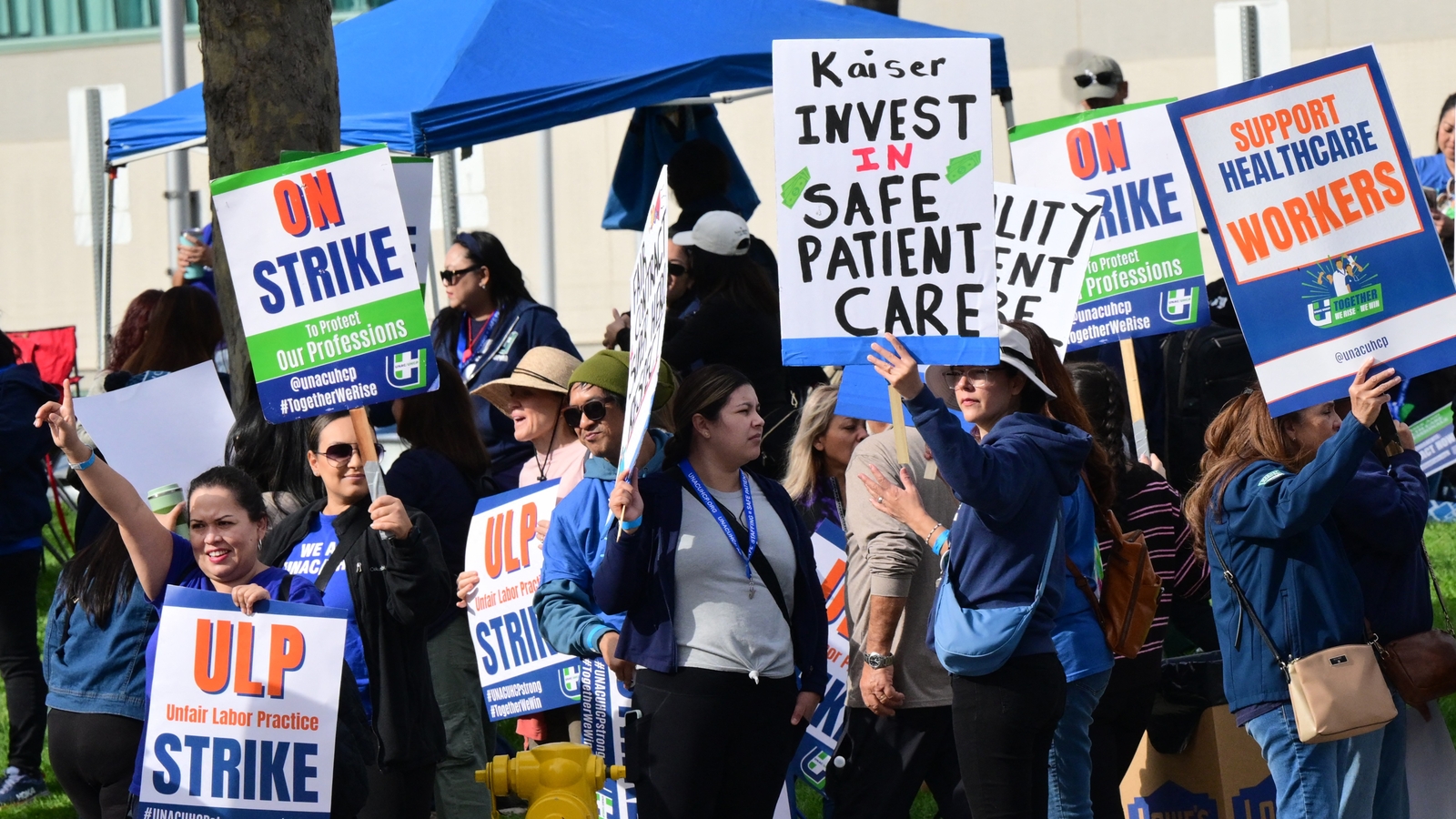
LOS ANGELES — Roughly 31,000 Kaiser Permanente healthcare workers across California and Hawaii walked off the job in an open-ended strike, escalating a high-stakes labor dispute centered on staffing levels, compensation, and what unions describe as the ability to deliver timely care.
The walkout includes a broad mix of clinical professionals represented by the United Nurses Associations of California/Union of Health Care Professionals, including registered nurses, pharmacists, nurse practitioners, physician assistants, therapists, and other specialists. Picket lines formed outside multiple Kaiser facilities, with workers arguing that chronic understaffing and workload pressures have made patient care harder to sustain.
Union leaders say the dispute is about more than wages. They describe a system strained by turnover and recruitment challenges, where staffing ratios and scheduling practices can affect safety, waiting times, and burnout. They have called for stronger commitments in contracts, including meaningful guarantees that staffing will keep pace with patient demand.
Kaiser Permanente has said its hospitals and nearly all medical offices will remain open, and that contingency plans are in place to reduce disruption. The system warned, however, that some in-person visits could be converted to virtual appointments, and that certain elective procedures may be rescheduled depending on local staffing and service needs.
The strike arrives amid wider labor unrest in healthcare, where hospitals and integrated systems have faced repeated work stoppages tied to post-pandemic conditions, rising costs, and a workforce that says it is being stretched too thin. Patients can be caught in the middle, weighing the need for continuity of care against claims that long-term quality depends on improved working conditions.
Both sides signaled they expect continued negotiations, but the timeline for a resolution is uncertain. For now, the strike is a test of how resilient Kaiser’s operations are under pressure—and a measure of whether unions can win enforceable staffing and pay changes in one of the nation’s largest not-for-profit healthcare systems.