U.S. risks losing measles elimination status as experts track linked outbreaks
International health authorities will assess whether measles transmission in the U.S. meets the threshold for losing elimination status, as scientists investigate whether outbreaks across multiple states are connected to a long-running chain that began in Texas.
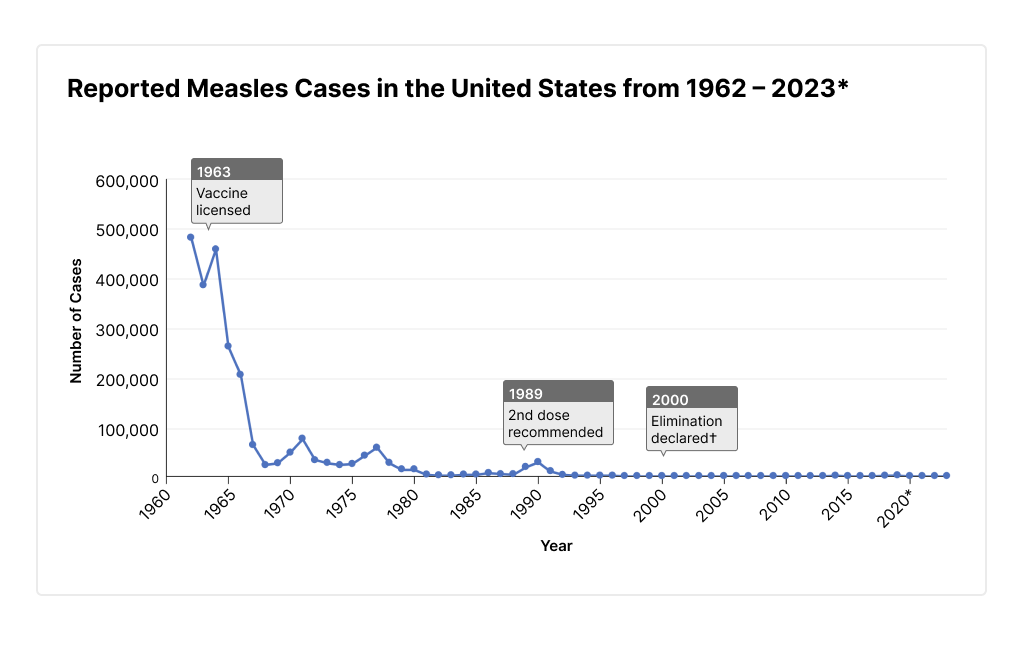
Public health experts say the United States is at real risk of losing its measles elimination status, a benchmark achieved in 2000, as international authorities prepare to evaluate whether the country has experienced uninterrupted transmission of the virus for at least 12 months. The determination is largely symbolic, but it reflects whether the virus has regained a sustained foothold inside U.S. borders.
Investigators are focusing on whether multiple outbreaks across states are part of a single continuous chain tied to an outbreak that began in West Texas in January 2025. Scientists are using case investigations, contact tracing, and genetic sequencing to test links between clusters in places such as Utah, Arizona, and South Carolina. Even if the technical definition becomes contested, experts emphasize that the underlying conditions—low vaccination coverage in pockets of the country—are what truly matter.
The U.S. recorded 2,242 confirmed measles cases across 44 states last year, the highest total in decades, with dozens of outbreaks. Doctors say the resurgence reflects declines in vaccination rates driven by misinformation, access barriers, and distrust, as well as the cost and complexity of tracing cases when outbreaks multiply across jurisdictions.
Sequencing has identified the same measles strain circulating in multiple parts of North America, including the U.S., Canada, and Mexico. But measles mutates relatively slowly compared with viruses like influenza, making it harder to prove that far-flung outbreaks are directly connected. That uncertainty could become central in the international review, where experts must decide how to handle data gaps and cross-border spread.
Public health officials warn that measles is a stress test for the vaccination system because the virus spreads extremely easily and requires very high community coverage to prevent outbreaks. Even a single case can trigger expensive response work, including quarantines, testing, and mass notifications—costs that compound when staffing and budgets are strained.
Experts say the practical takeaway is straightforward: raising vaccination rates, especially among children, is the most effective way to stop transmission and avoid further erosion of hard-won gains. The international decision, expected in spring 2026, will be watched as a measure of how quickly the U.S. can reverse a trend that many doctors view as both preventable and dangerous.